Showing posts with label Evangelism. Show all posts

Friday, February 29, 2008

Pre-Discipleship

In their book Breaking the Missional Code, Ed Stetzer and David Putnam point out that emerging generations are taking longer to come to a point of making a commitment to being a follower of Jesus Christ. Many of these people are involved in the life of a church, attending bible study and small group, connecting with believers, and even actively involved in a ministry for six or seven years before they commit to following Christ.

They go on to point out that this extended time of examining the church and Christian faith is actually a good thing:

A number of years ago, we began to observe an interesting trend in many of our new churches that attracted a large number of unreached/unchurched people. It seemed that the longer individuals took to finally go public with their faith, the less likely they were to fall through the cracks or go out the back door. On the other hand, when someone came in and rather quickly expressed a commitment to Christ, they seemed to
disappear just as quickly.

The longer people explore the faith before making a commitment, the greater their commitment. The more they are involved in the life and activities of a Christian community, the greater the likelihood they will stay commited to that community.

For a long time, we have place the emphasis on becoming a Christian at the point of decision. You walk down an aisle, pray a prayer, fill out a card. We emphasize the need to close the deal and want to get people to pray the prayer. But how would it look different and how would it change our methods and our results if we saw evangelism and discipleship as intimately tied to each other, in fact as two sides to the same coin? We tend to think of evangelism as something you do before a person becomes a Christian and discipleship as something you do after a person becomes a Christian. But what if we saw evangelism as pre-discipleship? What if we began "discipling" people before they actually became disciples? Would we see greater commitment and more long term commitment?

After all, Jesus didn't tell us to go into all the world and "make decisions." He said go into all the world and "make disciples." For too long we have tried to get people to make a decision so they will "get saved." But maybe we need to get people to commit not to a one time decision, but to a lifetime of being a Christ-follower.

Monday, January 28, 2008

Here Am I, Send Me

The family and I have some big news about our future. About two years ago, LaRissa and I began praying about how God wanted to use us, seeking his direction for our future and our ministry. We first began to sense God telling us to get ready because he was going to call us to something different than anything we had been involved in to this point. So we continued praying, seeking to align our hearts with God's heart, and ready ourselves for whatever God was calling us to.

As we continued to pray, we began exploring some opportunities and looking at different possibilities for our ministry service, but none of the possibilities seemed to be quite right. Some doors closed and some opened that didn't seem to be the right decision. So, we just continued to seek God and allow ourselves to be molded and shaped into the people he wanted us to be.

In our prayers, we came to a point of complete surrender to God. We told God that we were available to be used by him whenever, wherever, however, and whatever, and that we would just wait for him to make known to us what he wanted us to do. We affirmed to God that the minute he did make that known to us that we would answer yes to him.

Well, about eight months ago, God began to clarify and confirm for us the direction that he was taking us in ministry. Finally, about six months ago, God clearly revealed to me exactly what he wanted us to do. I was in a meeting where the speaker was telling about the importance of church planting and various models for planting churches.

At that time, I felt God tap me on the shoulder and say, "That's what I want you to do." Now, God speaks to different people in different ways, and the way that God ordinarily speaks to me is through inward urgings and tugs at my heart. (I know that sounds very mystical and maybe a little vague, but that's the best way I can explain it.) But this day, God spoke to me with those specific words: "That's what I want you to do." So, I looked around to see if somebody had said something to me. Nope. So, I said, "Say what?" Really spiritual, huh? And God said again but more clearly, "I want you to go into church planting."

So, I went home that afternoon, walked through the door, and said to my awesome, beautiful, amazing wife, "I think God is calling me into church planting." Now, I've heard all the horror stories about wives' responses to a statement like that, but my wife says to me, "Yeah, I can see that." Over the next several months I began to seek wise counsel and continued to find confirmation of the call and affirmation of how God had worked in my life to prepare me for this.

To make a long story short, I am now connected with a church planting network, and will be planting a church in Anna, TX. Anna is currently the fasting growing city in north central Texas. It has experienced a 177% growth rate over the last six years. We will be planting with the North American Mission Board and the Southern Baptists of Texas Convention.

The target kick-off Sunday for the new church is September 7, 2008. We will begin intensive work in the community in Anna in May.

We want and need you to be involved in this church planting process. First and foremost, we desperately need your prayers. This is a God-sized task, and it will not happen unless he works in amazing ways. Pray for our family. Pray for workers to help us. Pray for people in the Anna community that they would be receptive to the good news. Pray for our financial support. We also want your blessing. We also need people to actively be involved. We will be doing door-to-door surveying, block parties, community service projects, preview services, you name it. We need people to help us be the hands and feet of Jesus with us.

If you would like to learn more details about the church plant, I will be posting that information on a new blog: www.blazingthetrail.blogspot.com.

Thursday, January 24, 2008

This Has Got to Be Effective!

I saw this truck in the Target parking lot this week. If you look closely, you will notice that one of the figurines glued to the top of the truck is the Grim Reaper holding a baby in his hands.


Also, take a look at the face of the guy walking by the truck in the background of the second picture. And, the red Target cart is reflected in the puddle under the truck, which makes it look like the truck is bleeding.


I affectionately refer to this as the Catholic Anti-abortionmobile.

Thursday, November 01, 2007

Virtual Church

Earlier this year LifeChurch.tv, a leader in the multi-site church movement, launched a virtual campus and worship experience called Experience Island online at Second Life. Users can explore the campus, participate in a worship service, and connect to XXX Church for help with pornography addiction through their online avatars.

Any thoughts on virtual church?

Thursday, May 31, 2007

Great Blog by Bob Roberts

Sorry I haven't blogged in a while. I've been pretty busy coming to the end of the school year. Hopefully I'll be able to start getting more stuff up now that things have settled into a more normal routine.

Bob Roberts has a great blog at Glocal Trekker about how our eschatology affects the way we live and carry out our mission in the world. You should really check it out.

Monday, February 05, 2007

Post-millenialism and a New World

One of the things that has gotten me thinking about heaven in the real world was a recent request by one of our women's small groups. The women are currently going through a bible study on the book of Daniel, a tough task for a lot of believers. As they have gone through the study, they have naturally come up with a lot of questions, so they have asked me to come and do a "Stump the Pastor" night with them so they can pick my brain.

In preparation for this question and answer time, I just began thinking through various issues of eschatology to begin to formulate some answers. I got to thinking about the four major approaches to eschatology (postmillenialism, historic premillenialism, dispensational premillenialism, and amillenialism) and was about to fly past posmillenialism.

Postmillenialism was perhaps the predominant viewpoint within the church for at least its first thousand years. Postmillenialism teaches that the world will get increasingly better through the efforts of Christians and the expanding of the gospel to the ends of the earth. As a result, the church will usher in a period of peace and the coming of God's kingdom that will last for a thousand years. At the end of that time, Christ will return to earth. The death nell for this millenial perspective came in the form of the horrors of the 20th century: WWI and WWII, the holocaust, the dropping of the atomic bomb, the cold war. It appeared that humanity was not getting better.

So, postmillenialists are a rare breed these days. But I got to thinking about the positive aspect of the postmillenialist perspective. You see, postmillenialists have a very positive outlook on life and the world and the ability of the church to make a difference in the world. They see the world as entirely redeemable. They hold out the possibility that we can impact culture for the good. I'm not yet a postmillenialist, but I am gaining a greater love for that kind of outlook in life.

Related Blog on "The Holiness of Everything"

Check out Michael McMinn's post "Escape from the Christian Ghetto" for a great blog on how Christians are creating their own counter-culture that often isolates us from the rest of the world.

Monday, January 29, 2007

Heaven in the Real World

I've been doing a lot of thinking lately about the world, culture, society, and other people. I've been asking God to give me his perspective on all these things and to enable me to see the holiness of everything, to be able to see the hand of God all around me.

You see, I think the standard conservative Christian position on the world, culture, and other people is that they are basically and fundamentally irredeemable. Oh, sure, God can and does occassionally change some people, but as a whole, society, culture, and people are growing worse and worse, are going down the tubes, and as a result should generally be avoided.

A far cry from the life and ministry of Jesus whose overarching message was the coming of the kingdom of heaven. The kingdom of heaven is at hand. Jesus' life and ministry was very much about the kingdom of heaven invading and transforming the kingdom of the world. His miracles were evidence of the coming of the kingdom. His teachings were about life in the kingdom. His death, burial, and resurrection were about the kingdom of the heavens being firmly established in this world and redeeming a people who are citizens of that kingdom and who will continue to carry forward that kingdom here on earth.

So, I ask the question, what would the world be like if Christians really believed that heaven were possible here on earth? How would we see the world and culture and society and other people differently if we saw them all as basically and fundamentally redeemable? How would it change our approach to life if we looked for the hand of God in every moment, every conversation, every interaction? Would our actions and attitude be different if our perspective on heaven was not some pie in the sky by and by approach, not some retreat from life in the real world, but if we understood that the kingdom of heaven is at hand right now in the world around us? What if instead of wishing for something better, we made the world better? What if, whenever we saw places in life that weren't quite heaven, we chose to do something about it to bring the life of the kingdom of heaven to reality here?

Think about it. Much more to come.

Tuesday, September 26, 2006

What Is Truth?


It's been a while since I've had a chance to do any blogging. My son is playing football for the first time this year, my oldest daughter is cheering, and my middle daughter is taking dance. It seems like we are running all the time now.

I've been thinking lately about the modernism/postmodernism divide and how it impacts how we share the incredible, life-changing message of Jesus Christ, relate to people, and approach life as a whole. It seems to me that in the life of the church modernism has been concerned with the search for the right answers, whereas postmodernism is more concerned with the search for the right questions.

One of the things that I have been meditating on over the last several weeks is the idea that God is in the questions. The modernist approach to apologetics and the Christian life was to carefully formulate an answer to all the questions that skeptics and even believers ask. The postmodern approach and the approach of the emerging church is to live out the questions, to enter into the questions in conversation with other people.

To me, it boils down to the reality that God doesn't always want us to encounter Him in the answers to our questions, but in the questions themselves. Life isn’t simple. It’s complex and hard to figure out, and there aren’t always easy answers to the problems and struggles and stresses of life. Life doesn’t always work out the way you’d planned. Life leaves us with doubts and confusion and questions.

God is so infinite and so complex and so amazing that we will never have Him all figured out. And the questions point us to that reality. The aspects of life and theology and the Bible and faith that we cannot quite grasp illustrate the fact that we will never fully comprehend the wonder of all that God is.

Much of the discussion between modernism and postmodernism comes down to the question of truth. Modernism concerns itself with the search for absolute truth while postmodernism involves some questioning of the methods, goals, and presuppositions of modernism in that quest for truth. Both approaches to truth stem from a Western mindset and understanding of truth that goes all the way back to Aristotle.

Is there a way out of the struggle between these two different understandings about truth? I think it is found in a Hebrew understanding of truth rather than a Greek understanding. Check out John 18:37-38: “Jesus answered, ‘For this reason I was born, and for this I came into the world, to testify to the truth. Everyone on the side of truth listens to me.’ ‘What is truth?’ Pilate asked.”

Pilate represents the Greek way of thinking about truth. For the Greek, truth was a philosophical concept. It related to what could be known through reason and thinking. It related to facts, and it was static and unchanging. So, when Pilate asks, “What is truth?” He wants to know, “What can be known through reason and thinking? What are the facts? What is the answer?” As Westerners, we are the inheritors of Greek thought, and so, that is the same definition of truth that most of us operate according to. Even the postmodern questioning of truth stems from a Greek way of thinking.

But Jesus was not a Greek. He was a Hebrew, and Hebrews had a vastly different understanding of truth from the Greeks. For Hebrews, truth is not static. It’s not fixed in time. It’s not like what’s true now is always true. For the Hebrew, truth is developing, unfolding. Truth is something that grows and develops over the course of time and history. For the Hebrew, truth is not something you arrive at through thinking; it is something you learn through experience in life. Truth is something you come to know as you see it demonstrated in life. And so, for the Hebrew, truth is not something you know in your head. Truth is something you know in your gut, because you’ve seen the value of it as you have experienced the struggles and heartaches and pressures of life.

In the Old Testament, God is called the God of truth, and in that context, truth means reliability, dependableness, faithfulness, the ability to perform what is required. And so, God’s truth is demonstrated in the experiences of life. So, for the Hebrew, truth is found at the intersection of life’s experiences and the wisdom and character of God. Now, according to that definition of truth, truth does not exclude questions. No, questions, struggles, doubts are the essence of what it means to discover truth. The person who questions God is the person who stands at the intersection of life and God’s wisdom seeking to understand truth. Questions are an essential part of a growing faith.

So, may we all come to this understanding of truth. Rather than a modernist or postmodernist approach to truth, rather than a Western, Greek approach to truth, let us have a biblical approach to truth. Let us come to find truth at the intersection of the character of God as revealed in His Word and the experiences of our lives.

Tuesday, August 15, 2006

Recommended Reading


I've just finished reading Lee Strobel's The Case for a Creator. It is an excellent, entry-level look at the intelligent design movement. Basically, the theory of intelligent design says that certain features of the universe, the earth, and life itself are best explained by an intelligent cause rather than an undirected process such as natural selection.

Strobel is a former atheist and was once chief legal affairs editor for the Chicago Tribune. That backgrounds forms the basis for Strobel's approach to the subject matter. Each chapter is a journalist's interview of a leading expert in a particular field within the intelligent design movement.

I would recommend this book to Christians seeking to gain greater understanding into the scientific arguments for creation. However, I would not recommend using it as a tool to give to your unbelieving friends. Use it to inform your own understanding so that you can interact with your friends about the subject.

Thursday, July 20, 2006

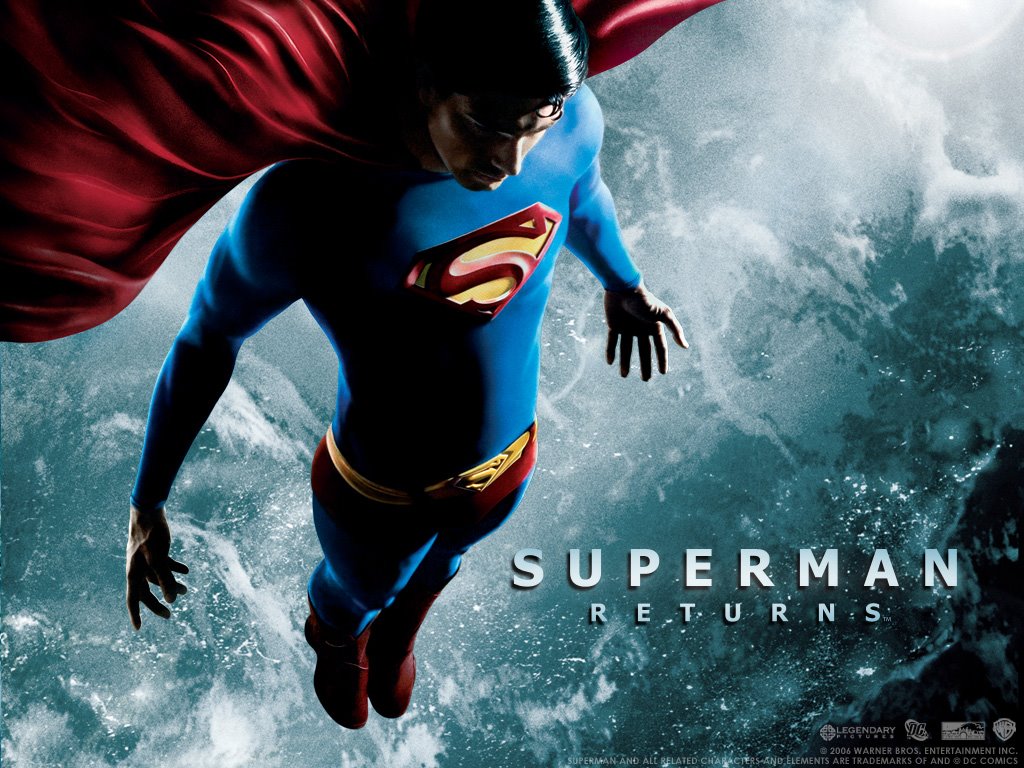
Superman Returns!

One cool spring evening in 1979, my mom, my dad, my brother and I loaded up into my dad's little blue Ford pick-up and went to the Howard Auto Theater, the drive-in movie theater outside of Nashville, AR.

There was a long line of cars backed up the highway waiting to get in, and we waited for what seemed like an eternity for our turn. We finally got in, and my dad got a spot about four rows back, a good view of the screen and close to the bathrooms and concession stand. He backed the truck into the spot, and once we got our hot dogs and popcorn, we all got in the back of the truck, wrapped up in quilts, and waited for the movie to start.

I still remember like it was yesterday that big S-shield flying across the screen followed by the name "Superman" and the first strains of John Williams' magnificent score. For the next two hours, I was as excited as a six-year-old boy can be. Superman was officially one of my heroes.

Well, last night I relived the moment as LaRissa and I took our four kids to see Superman Returns. I had pretty high expectations and was not disappointed. The kids had the same reaction I did as a kid. They thought it was one of the best movies they had ever seen. It was awesome for me to live out the experience with them ("The son becomes the father and the father becomes the son.")

Much has already been said about how Superman is a Christ-figure in the current Superman installment as well as in Richard Donner's Superman: The Motion Picture and Superman II (I highly recommend Stephen Skelton's The Gospel According to the World's Greatest Superhero), so I won't give a detailed analysis. However, there is one moment in the film that is especially worthwhile in this regard. Superman has left earth to try to find the remains of his home planet, Krypton, and has returned to earth after a five year absence. The world has moved on without him, and Lois Lane has written an editorial entitled "Why the World Doesn't Need Superman." Lois tells Superman, "The world doesn't need a savior." Superman responds, "You said the world doesn't need a savior. But I hear people crying out for one every day." Isn't that really what being a Christian in the world is all about? Responding to a world that is crying out for a savior everyday.

I, for one, am so glad Superman has returned!